Oscilloscope Market Outlook 2030: Digital Oscilloscopes and Advanced Testing Technologies Drive Growth
Oscilloscope Market to Reach USD 2.83 Billion by 2030 as Semiconductor Innovation and Digital Electronics Testing Accelerate Growth
Global Oscilloscope Market to Grow at 8.12% CAGR, Driven by Digital Oscilloscopes, 5G Infrastructure, Electric Vehicle Development and Advanced Electronic Testing Technologies
The global Oscilloscope Market is gaining momentum as electronics manufacturers, semiconductor companies and engineering organizations increase investments in advanced testing and measurement technologies. According to Maximize Market Research, the market was valued at USD 1.64 billion in 2023 and is projected to reach USD 2.83 billion by 2030, registering a compound annual growth rate (CAGR) of 8.12% during 2024–2030.
Growing demand for high-performance electronic devices, increasing research and development activities and the transition toward digital measurement technologies are reshaping the industry. Oscilloscopes play an essential role in visualizing electrical signals, identifying circuit abnormalities and validating electronic system performance.
The development of electric vehicles, advanced telecommunications infrastructure and increasingly complex electronic components is creating opportunities for manufacturers of precision test equipment. As industries prioritize product reliability and engineering efficiency, oscilloscopes are evolving into sophisticated analytical instruments supporting modern electronic design and quality assurance.
𝐃𝐨𝐰𝐧𝐥𝐨𝐚𝐝 𝐏𝐃𝐅 𝐁𝐫𝐨𝐜𝐡𝐮𝐫𝐞 @
https://www.maximizemarketresearch.com/request-sample/62780/
Oscilloscope Market Overview: Precision Measurement Becomes Essential for Electronics Innovation
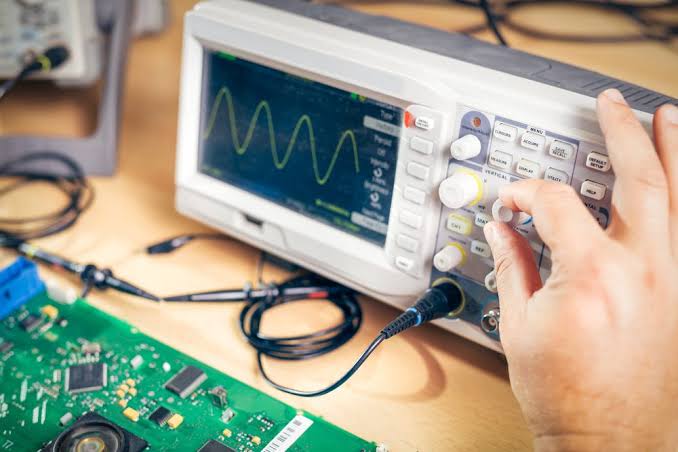
Oscilloscopes are electronic testing instruments that display changes in electrical signals over time. Engineers use these devices to examine waveform characteristics, measure signal parameters and investigate the performance of electronic circuits.
Traditional oscilloscopes primarily provided visual representations of electrical signals. Modern digital systems incorporate advanced signal processing, waveform storage, automated measurements and specialized analytical functions.
These capabilities help engineers examine complex electronic systems during product design, manufacturing, maintenance and troubleshooting.
The increasing complexity of electronic equipment creates demand for instruments capable of capturing high-speed signals and identifying intermittent abnormalities.
Oscilloscopes are widely used in telecommunications, automotive engineering, consumer electronics, aerospace, healthcare and scientific research.
Businesses increasingly evaluate measurement equipment according to bandwidth, sampling performance, channel availability, accuracy, software compatibility and long-term operating requirements.
Consequently, purchasing decisions are becoming closely connected to broader engineering productivity and product development strategies.
Digital Transformation Strengthens Oscilloscope Market Growth
The transition from analog measurement instruments toward digital oscilloscopes represents a major growth driver.
Digital oscilloscopes enable waveform capture, storage and analysis, allowing engineers to examine signals beyond immediate visual observation.
Advanced triggering functions help identify specific electrical events, while integrated software supports automated measurements and detailed waveform evaluation.
These capabilities are increasingly valuable in electronic environments involving high-speed communication, complex integrated circuits and multiple interacting signals.
The development of digital testing infrastructure also supports improved documentation and collaboration between engineering teams.
Manufacturers introducing advanced products require instruments capable of maintaining reliable measurement performance throughout design validation and production testing.
For equipment suppliers, technological differentiation increasingly depends on practical analytical capabilities, user experience and compatibility with evolving electronic architectures.
Semiconductor and Consumer Electronics Manufacturing Create Strong Demand
Expanding semiconductor and consumer electronics manufacturing activity is an important source of oscilloscope demand.
Electronic products contain increasingly sophisticated processors, sensors, memory components, communication interfaces and power management circuits.
Engineers require reliable testing equipment to evaluate signal behavior, investigate circuit performance and identify potential design problems.
Oscilloscopes are used during component development, printed circuit board testing, prototype validation and manufacturing quality assurance.
The growing complexity of smartphones, connected devices, computing equipment and industrial electronics increases measurement requirements.
Semiconductor companies also need specialized instruments for high-speed signal analysis and evaluation of advanced electronic interfaces.
For technology manufacturers, investment in appropriate measurement equipment supports product validation and may reduce the risk of costly design revisions.
The commercial opportunity extends to instrument manufacturers offering advanced signal analysis, automated testing features and integration with laboratory systems.
Electric Vehicle Development Accelerates Automotive Oscilloscope Applications
The automotive industry's transition toward electrification and advanced electronic systems creates opportunities for oscilloscope manufacturers.
Electric vehicles incorporate power converters, battery management systems, electronic control units, charging infrastructure and sophisticated communication networks.
These components require detailed electrical testing during development and validation.
Oscilloscopes can support engineers investigating switching behavior, signal timing, control system performance and power electronics characteristics.
Advanced driver-assistance systems also increase the number of electronic interfaces requiring verification.
Automotive manufacturers and component suppliers increasingly evaluate measurement technologies according to their ability to support complex electrical architectures.
Testing equipment must provide sufficient measurement performance while remaining compatible with established engineering processes.
Suppliers offering automotive-focused analysis capabilities and reliable technical support may benefit from continuing investment in vehicle electrification.
5G and Telecommunications Infrastructure Support High-Frequency Testing
The development of telecommunications infrastructure is another important driver of the Oscilloscope Market.
High-speed communication networks rely on electronic components capable of processing complex signals under demanding operating conditions.
Engineers use oscilloscopes to evaluate timing behavior, signal integrity and electrical performance in communication equipment.
The transition toward higher data transmission speeds increases requirements for adequate bandwidth, sampling capabilities and advanced triggering.
Testing applications extend to network equipment, communication interfaces and supporting electronic components.
For telecommunications manufacturers, measurement reliability contributes to product development, validation and troubleshooting.
Oscilloscope suppliers can address these requirements through instruments offering higher bandwidth, advanced analysis software and efficient laboratory workflows.
Digital Oscilloscopes Dominate the Product Type Segment
Based on oscilloscope type, the market is segmented into Digital Oscilloscope, Analog Oscilloscope, USB Oscilloscope and Portable Oscilloscope.
Digital oscilloscopes dominated the global market in 2023 and are expected to maintain the leading position throughout the forecast period.
Their market position reflects strong adoption across electronics design, manufacturing and research applications.
Digital storage oscilloscopes capture and store waveform information, allowing engineers to examine electrical events after acquisition.
This functionality is valuable for analyzing transient signals and diagnosing intermittent circuit problems.
Advanced digital instruments can also provide mathematical analysis, automated measurements and flexible data management.
Manufacturers increasingly differentiate their products through measurement performance, intuitive interfaces and application-specific analytical capabilities.
The continued transition toward digital testing supports opportunities across professional laboratories, engineering facilities and industrial environments.
Portable and USB Oscilloscopes Address Flexible Testing Requirements
Portable oscilloscopes provide measurement capabilities in environments where conventional laboratory equipment may be impractical.
Field engineers, maintenance technicians and service professionals require instruments that support troubleshooting across different locations.
Compact equipment can improve accessibility when testing industrial machinery, communication systems and installed electronic equipment.
USB oscilloscopes connect to compatible computers and use software interfaces for waveform visualization and analysis.
These solutions can be attractive for educational institutions, smaller engineering teams and applications where portability and cost are important.
However, instrument selection must reflect technical requirements rather than physical size alone.
Users should evaluate bandwidth, sample rate, channel count, input characteristics and software reliability before purchasing.
Affordable and flexible testing solutions create opportunities for manufacturers serving different customer groups.
Aerospace and Defence Applications Require Reliable Signal Analysis
Aerospace and defence organizations use advanced electronic systems supporting communication, navigation, control and monitoring.
The development and maintenance of these systems require appropriate measurement instruments and structured verification procedures.
Oscilloscopes assist engineers in examining electronic signal behavior and investigating component performance.
High-performance equipment may be necessary for systems involving demanding timing and signal integrity requirements.
Testing reliability is especially important where equipment failures can affect safety or operational availability.
Manufacturers serving these industries must consider measurement accuracy, instrument reliability and long-term technical support.
The market presents opportunities for specialized instruments designed for complex engineering environments.
Medical Technology and Research Support Instrument Adoption
Medical devices increasingly incorporate sensors, electronic controllers, communication interfaces and digital processing systems.
Oscilloscopes are used during electronic development and testing to investigate signal characteristics and verify circuit operation.
Research laboratories also depend on measurement instruments when developing new technologies and evaluating experimental systems.
Universities and educational institutions use oscilloscopes to support engineering instruction and practical electronics training.
The expansion of technical education and scientific research creates demand across different instrument performance categories.
Equipment manufacturers can address these customers through accessible software, educational resources and reliable technical assistance.
High Equipment Costs and Technical Complexity Restrain Adoption
Advanced oscilloscopes can involve substantial purchasing costs, particularly when users require high bandwidth, multiple channels and specialized analytical capabilities.
The published market research identifies prices exceeding USD 100,000 for certain high-end instruments.
Such expenditure can create barriers for smaller enterprises, laboratories and educational institutions.
Operating sophisticated measurement equipment also requires technical knowledge.
Engineers must understand sampling principles, triggering, signal integrity and measurement limitations to interpret results correctly.
Rapid technological advancement can introduce concerns regarding equipment replacement and long-term investment value.
Businesses should evaluate instruments according to actual application requirements, utilization levels and expected service life.
Manufacturers offering training, software support and differentiated product ranges can help customers address these challenges.
Asia Pacific Dominates the Global Oscilloscope Market
Asia Pacific held the largest share of the Oscilloscope Market in 2023 and is expected to maintain its leading regional position.
China, Japan, South Korea and Taiwan possess established electronics manufacturing ecosystems that generate significant demand for testing and measurement equipment.
Manufacturers operating semiconductor production facilities, electronics assembly operations and component development centers require reliable measurement infrastructure.
India, Vietnam, Malaysia and Indonesia also present opportunities through electronics manufacturing expansion and telecommunications development.
Research institutions and engineering universities contribute additional demand.
The region's market outlook is closely linked to manufacturing activity, technological development and investment in electronic product innovation.
North America Benefits from Advanced Research and Semiconductor Development
North America represents an important regional market supported by established technology companies, research institutions and specialized engineering industries.
The United States is a significant center for semiconductor development, aerospace technology, telecommunications and electronic equipment innovation.
These industries require advanced testing capabilities during product development and validation.
Automotive electrification and research into high-performance electronic systems create additional applications.
Canada contributes through engineering, telecommunications and academic research activities.
Manufacturers supplying North American customers increasingly emphasize measurement accuracy, software capabilities and technical service quality.
Europe Strengthens Demand Through Automotive and Industrial Innovation
Europe remains an important market for oscilloscopes, supported by established automotive, industrial equipment, telecommunications and engineering industries.
Germany represents a significant market because of its advanced manufacturing and automotive technology ecosystem.
The United Kingdom, France, Italy and other European economies contribute through electronics research, aerospace development and specialized industrial applications.
The transition toward electric mobility and more sophisticated industrial electronics increases requirements for precise measurement.
European engineering organizations also prioritize equipment reliability, integration capabilities and long-term operating efficiency.
Technology providers offering advanced analytical features and dependable support can address these requirements.
Middle East, Africa and South America Present Emerging Opportunities
The Middle East and Africa represent opportunities for test and measurement equipment as telecommunications, industrial and educational infrastructure develops.
Engineering laboratories, universities and technical service providers require instruments for research, training and maintenance.
South America also provides opportunities through industrial electronics, automotive applications and telecommunications infrastructure.
Brazil and Argentina represent important markets within the region.
Demand is influenced by industrial investment, available technical expertise and equipment affordability.
Suppliers seeking expansion should consider local distribution networks, training requirements and after-sales service capabilities.
Recent Product Developments Highlight Measurement Innovation
Product development continues to focus on improved bandwidth, advanced processing and accessible instrument interfaces.
In November 2023, Siglent introduced its SDS7000A oscilloscope series, including models offering 3 GHz and 4 GHz bandwidth configurations.
The equipment incorporated multiple measurement channels and a large touchscreen interface designed to support efficient operation.
In May 2023, Pico Technology announced updates to its PicoScope 9000 series of PC-based oscilloscopes.
These instruments addressed applications involving high-speed data streams and radio-frequency signal characteristics.
The developments illustrate continued investment in measurement performance, signal analysis and instrument usability.
Competitive Landscape: Manufacturers Focus on Accuracy and Advanced Features
The global Oscilloscope Market includes established electronic test equipment manufacturers and specialized measurement technology companies.
Major companies covered in the competitive landscape include Tektronix, Keysight Technologies, Rohde & Schwarz, Teledyne LeCroy, RIGOL Technologies, Yokogawa Electric, Fluke, Pico Technology, GW Instek, National Instruments and B&K Precision.
Competition is influenced by bandwidth, sampling performance, waveform analysis, software features and equipment reliability.
Manufacturers increasingly develop products designed for specialized applications in automotive engineering, telecommunications and semiconductor testing.
Customer decisions depend on measurement requirements, technical support, product longevity and ownership costs.
Providers combining reliable hardware with advanced software and effective customer training can strengthen their competitive positioning.
Future Business Outlook: Advanced Measurement Becomes Central to Electronic Innovation
The future development of the Oscilloscope Market is closely connected to technological advancement across the global electronics industry.
Manufacturers should prioritize measurement solutions that address practical engineering requirements and support increasingly complex electronic designs.
For industrial customers, investment decisions should consider bandwidth requirements, accuracy, software functionality, staff expertise and lifecycle costs.
Equipment suppliers can strengthen their market position through advanced digital features, application-specific solutions and accessible technical support.
The projected market expansion to USD 2.83 billion by 2030 reflects the growing importance of precise electronic testing.
As semiconductor design, vehicle electrification and communication technologies advance, oscilloscopes will remain essential instruments for improving product reliability, supporting engineering research and validating complex electronic systems.
About Maximize Market Research
Maximize Market Research publishes sector forecasts, competitive analysis, and consulting insight for teams evaluating demand, competition, pricing, and growth strategy across high-value industries.
The company provides market intelligence and consulting services across electronics, semiconductor manufacturing, automotive, telecommunications, aerospace, healthcare, industrial automation and other major sectors.
Its research supports competitive assessment, investment evaluation, market entry planning, strategic decision-making and long-term business development.
𝐃𝐨𝐰𝐧𝐥𝐨𝐚𝐝 𝐏𝐃𝐅 𝐁𝐫𝐨𝐜𝐡𝐮𝐫𝐞 @
https://www.maximizemarketresearch.com/market-report/global-oscilloscope-market/62780/
Contact Information
MAXIMIZE MARKET RESEARCH PVT. LTD.
2nd Floor, Navale IT Park Phase 3
Pune Banglore Highway, Narhe
Pune, Maharashtra 411041, India
Phone: +91 9607365656
Email: sales@maximizemarketresearch.com
Website: https://www.maximizemarketresearch.com/
Explore the Complete Oscilloscope Market Report for Detailed Market Forecasts, Product Segmentation, Competitive Intelligence and Regional Business Opportunities.